History

The Tuskegee Airmen Story

America's first Black military aviators — and the living legacy they left for us to carry.

During World War II, a generation of dedicated young men enlisted in the U.S. Army Air Corps at a time when systemic racism tried to exclude them from the skies entirely. They were sent to Tuskegee Army Air Field, Alabama — a segregated base — where they were expected to fail. They did not fail.

"Dedicated, determined young men who enlisted to become America's first Black military airmen. They accepted the challenge during a time when many believed Black men lacked intelligence, skill, courage, and patriotism." — Tuskegee Airmen, Inc.

These men came from every corner of America. They fought two wars simultaneously — one against Germany's Luftwaffe over the skies of Europe, and another against the forces of racism and segregation at home. In both theaters, they won.

The 332nd Fighter Group — the "Red Tails" — earned a reputation as one of the finest escort groups of the war. Bombers they escorted reported zero losses to enemy aircraft — a record no other escort group could match. They flew more than 15,000 sorties and earned over 150 Distinguished Flying Crosses.

In 1972, Tuskegee Airmen, Inc. was founded to carry that fighting spirit forward — motivating young Americans to claim their rightful place in our nation's future. Today, more than 50 active chapters continue that mission across the United States.
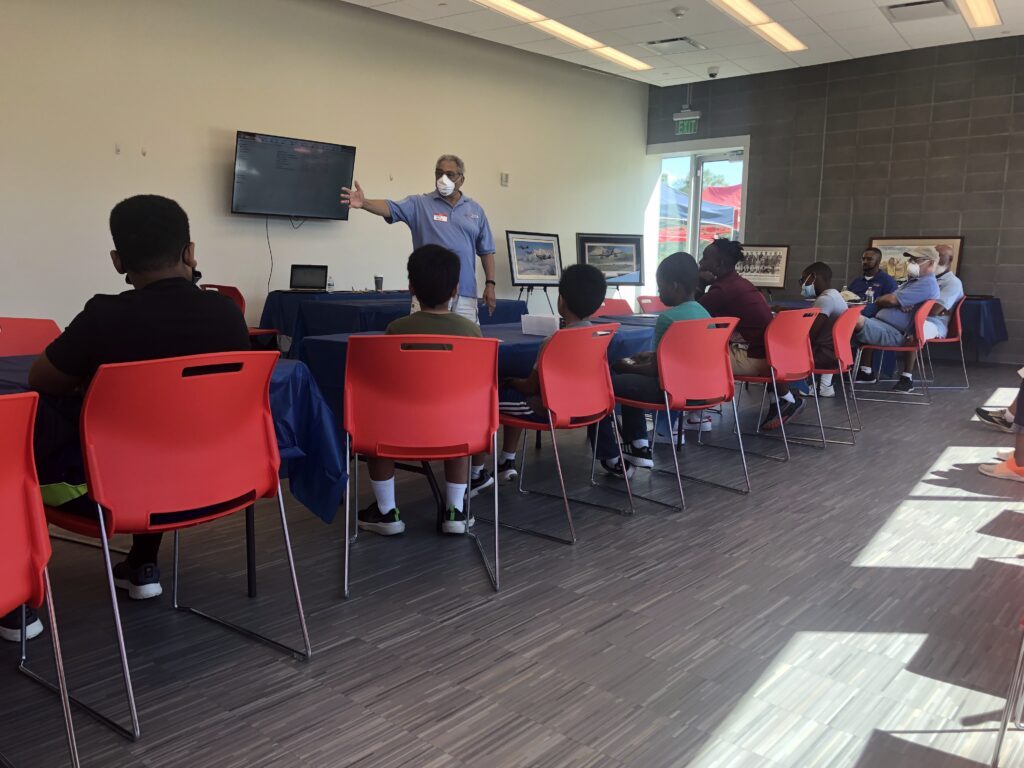
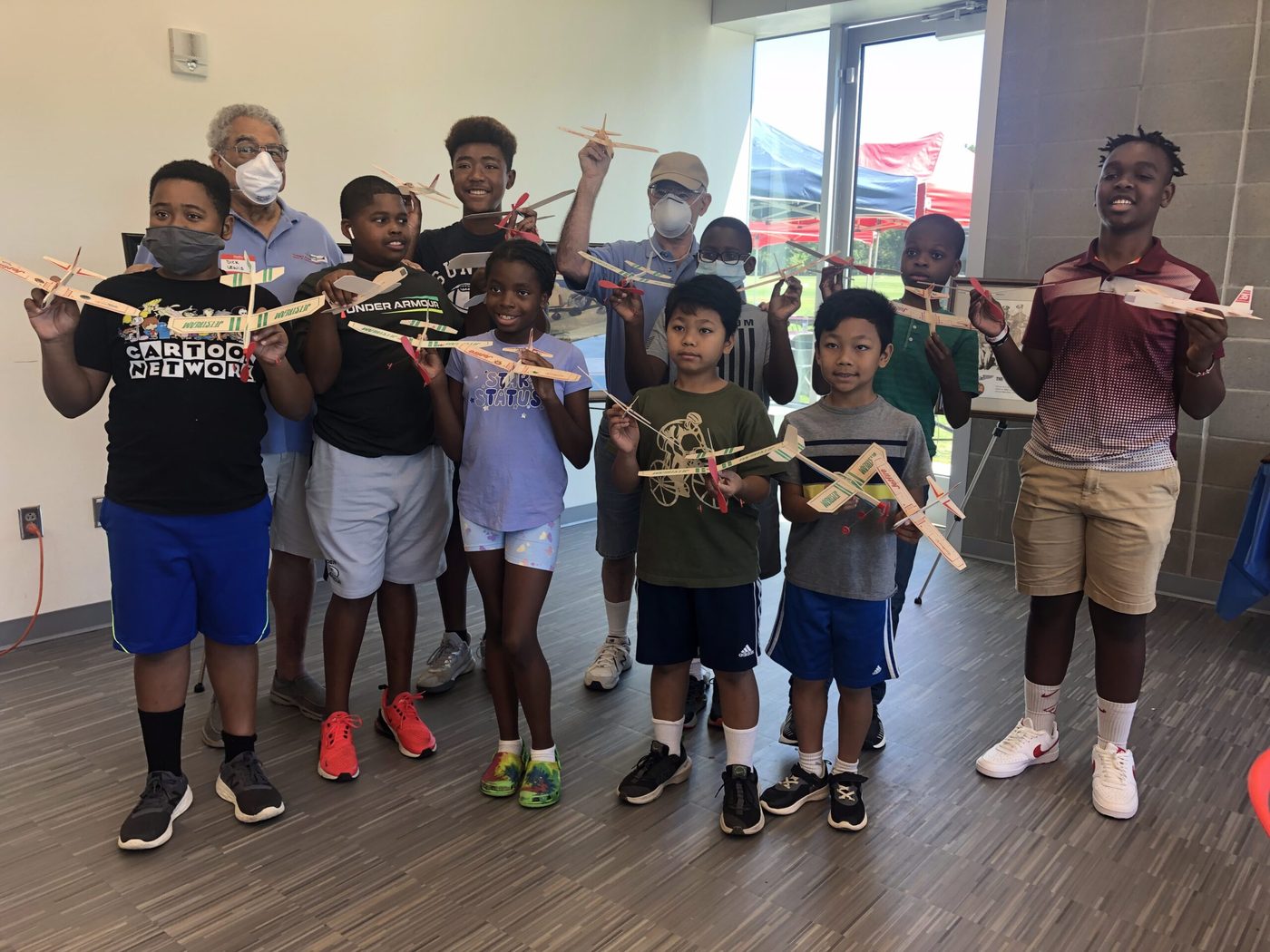
HOCC chapter event photo
HOCC Chapter Event
HOCC youth program activities
HOCC Youth Program
▶ Timeline: From Tuskegee to Raleigh
July 19, 1941
First aviation class begins

13 cadets enter training at Tuskegee Army Air Field, Alabama.

March 7, 1942
First 5 pilots earn their wings

America's first Black military pilots are commissioned — proving the doubters wrong in nine months.

1943–1945
Combat in the Mediterranean

The 332nd Fighter Group flies 15,000+ sorties. Zero bomber losses to enemy aircraft on their escorts — an unmatched record.

1941–1946
~1,000 pilots graduate

15,000+ total Airmen trained including navigators, bombardiers, nurses, mechanics, and support personnel.

1972
Tuskegee Airmen, Inc. founded

Original Airmen create a national nonprofit now with 50+ chapters across the U.S.

2004
Heart of Carolina Chapter founded

Dr. John Driver, an original Tuskegee Airman, and his wife Lavon-De establish HOCC in Raleigh–Durham.

2004–Present
HOCC programs active and growing

School visits, ACE Camp, scholarship awards, and monthly community meetings — the mission continues.

🏅 The Legacy Continues Here

Every school visit, every scholarship, every ACE Camp session — HOCC is the direct continuation of what 13 cadets started in 1941. The Red Tails flew so our youth could soar.

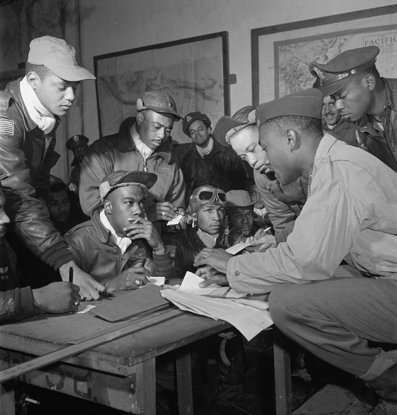
Tuskegee Airmen of the 332nd Fighter Group at a mission briefing in Italy, 1945
Airmen of the 332nd Fighter Group at a mission briefing, Italy, 1945. Library of Congress
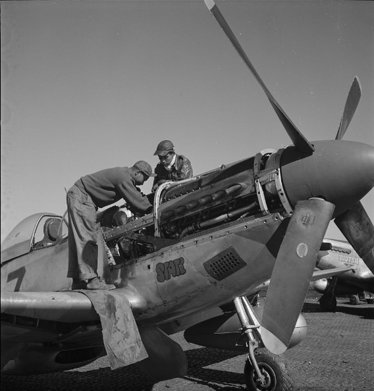
A crew chief and pilot servicing a red-tailed P-51 Mustang engine, 1945
Crew chief Marcellus Smith and pilot Roscoe Brown work on a P-51 Mustang, 1945 — ground crews were as vital as pilots. Library of Congress
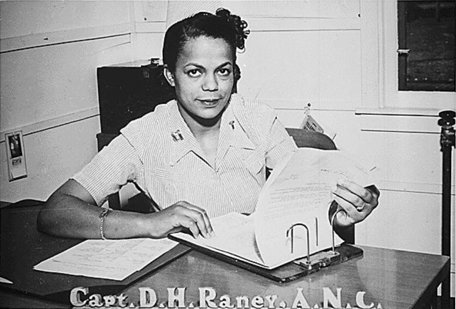
Captain Della Raney, the first Black chief nurse in the U.S. Army Nurse Corps, 1945
Capt. Della Raney, 1945 — trained in Durham; the Army Nurse Corps' first Black chief nurse. National Archives
North Carolina's Own

North Carolina's Tuskegee Airmen

About twenty of the original Tuskegee Airmen called North Carolina home — pilots, instructors, and the women who served beside them. Here are a few of their stories.

✈️

Dr. Stewart B. Fulbright

B-25 pilot with the 477th Bombardment Group; later the first dean of the business school at N.C. Central University in Durham.

🎖️

Col. Vernon V. Haywood

A Raleigh native who commanded the 302nd Fighter Squadron and became one of the first Black jet instructors in the U.S. Air Force.

🪂

Capt. Willie H. Fuller

From Tarboro; flew 76 combat missions and became the first Black single-engine flight instructor at Tuskegee.

🕊️

2nd Lt. Fred L. Brewer Jr.

A Charlotte native and Shaw University graduate, lost over Europe in 1944 — identified and brought home to Salisbury National Cemetery in 2023.

⚕️

Capt. Della Raney

Trained as a nurse in Durham; the Army Nurse Corps' first Black chief nurse — among the women honored as Documented Original Tuskegee Airmen.

⭐

Lt. Wilson V. Eagleson

Flew with the 99th Fighter Squadron, the first Black flying unit of the war, downed two enemy planes, and made his home near Goldsboro.

The Airmen were not only pilots — the Tuskegee team included women who served as nurses, mechanics, and parachute riggers, now honored as Documented Original Tuskegee Airmen. Adapted from “They Flew So Our Youth Could Soar: North Carolina's Tuskegee Airmen,” by chapter president Warren Gonsalves, featured in Tar Heel Junior Historian (Spring 2027).

Our Story

How the Heart of Carolina Chapter began

The Heart of Carolina Chapter held its first organizational meeting in February 2004 in North Carolina's Research Triangle, and was chartered by Tuskegee Airmen, Inc. in 2005. Dr. John Driver — an original Tuskegee Airman — and Bill Williams, the chapter's first president, were central to its founding.

Since then, HOCC has grown into a community of civilians, veterans, educators, and families. The chapter has long been hosted by the NCDOT Aviation facility at Raleigh–Durham International Airport, and gathers on the third Saturday of each month to carry the Airmen's story to the next generation.

Chapter Officers

Chapter leadership

The Heart of Carolina Chapter is led by volunteers committed to preserving the Tuskegee Airmen's legacy across central North Carolina.

Warren Gonsalves

President

Leads chapter operations, community outreach, and coordination with national Tuskegee Airmen, Inc.

Lynn Hawkins

Vice President

Vice President and Public Affairs & Technology Officer — supports programs, membership, and communications.

Larry Leise

Secretary

Keeps the chapter's records, correspondence, and meeting minutes.

Dick Lewis

Treasurer

Oversees chapter finances, the scholarship fund, and 501(c)(3) compliance.

David Terrell

Historian

Preserves and shares the chapter's history and the Tuskegee Airmen legacy.

Our Impact

Carrying the legacy forward in central NC

Since 2004, HOCC has been translating history into action — program by program, student by student, across the Triangle.

📢

School Engagements

Elem. & middle school visits across the Triangle bringing the Airmen's story to classrooms every year.

✈️

ACE Camp Support

Aviation career camp mentorship — opening aerospace doors for youth who never knew they were open.

🏆

Scholarship Fund

Annual awards for students pursuing aviation, aerospace, and related disciplines.

🤝

Community Membership

Monthly meetings open to all — a growing chapter of civilians, veterans, educators, and families.

Why Join HOCC

You don't need wings. You need to believe history matters.

"These aren't just people preserving a museum exhibit. They are actively, right now, walking into elementary schools and sitting down with kids and saying: those pilots looked like you too. They flew so you could dream bigger."

HOCC is the direct, living continuation of what 13 cadets started in Alabama in 1941. Every school visit, every scholarship check, every ACE Camp session is a sortie in their honor.

You don't need a military background, an aviation license, or any special credentials. You need to show up — and this chapter will be genuinely glad you did.

Heart of Carolina Chapter members at Abrams Restaurant in Pinetops NC — chapter community gathering
Heart of Carolina Chapter Members · Pinetops, NC
🎓

For Members

Attend a meeting with no commitment required. Meet a chapter that is mission-driven and open to everyone — women and men of all backgrounds. Your time directly serves the young people of central NC.

❤️

For Donors

Your money goes directly to scholarships, ACE Camp programs, and chapter operations that keep speakers walking into classrooms. 100% stays in central North Carolina.

🏢

For Sponsors

Association with the Tuskegee Airmen legacy is a statement that your organization believes in excellence, breaking barriers, and investing in the next generation. The story you get to be part of is one of the most powerful in American history.